Samsung Electronics Shareholders Enraged… Taking Action on the 6th Over Performance Bonus Controversy
Shareholders of Samsung Electronics are planning a protest and march on the 6th…
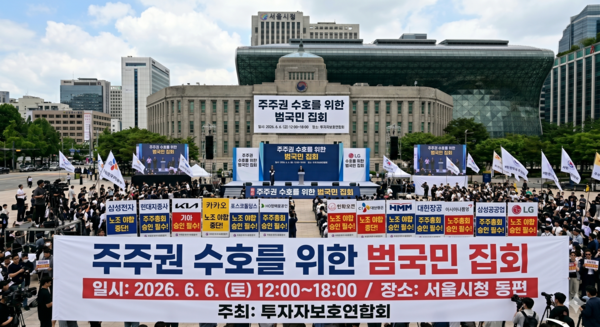
Less than two weeks after the labor and management of Samsung Electronics finalized an agreement on performance bonuses linked to operating profit, shareholders have begun to take action. The reason cited is that the general shareholders' meeting was not included at the negotiation table.
The Investor Protection Association announced on the 2nd that it will hold a rally at the east side of Seoul City Hall at 12:00 PM on the 6th, followed by a walking march from Mugyo-ro to Gwanghwamun and the Blue House Sarangchae. The rally notification was officially filed with the Seoul Metropolitan Police Agency on this day, and the number of participants is expected to be around 200. The association stated that it is also considering second and third rallies.
"Profit distribution without shareholder consent violates Commercial and Criminal Law"
The association's logic is clear. They argue that performance bonuses are not a matter of wages, but a matter of disposing of shareholder assets. They claim that operating profit belongs to the shareholders, and the decision on its disposal must go through a resolution at a general shareholders' meeting.
On the 31st of last month, the association sent a 'Guideline to Conclude the Performance Bonus Controversy' to the Office of the President, the Ministry of Trade, Industry and Energy, the Ministry of Employment and Labor, and the Board of Directors of Samsung Electronics. They cited Article 382-3 of the Commercial Act (Duty of Loyalty of Directors) and Article 356 of the Criminal Act (Breach of Trust) as grounds.
What the association is particularly concerned about is the precedent. They argue that if this agreement, which is at the level of 12–15% of operating profit, is accepted, there will be no logical basis to stop demands for 50% or 100% during the next strike pressure.
In fact, similar performance bonus conflicts are continuing not only at Samsung Electronics but also at major large corporations such as Hyundai Motor, HD Hyundai, LG, and Kakao, leading to observations that this rally may not be a one-time event.
The proposed solution is procedural. The association's position is that "whether the performance bonus ratio is 12% or 100%, all controversies will be concluded if the board submits the item for a vote at the general shareholders' meeting."
The association also strongly protested against the recent briefing by Blue House Senior Spokesperson Kang Yu-jung and the 'Korean-style Social Solidarity Wage Policy Emergency Forum' led by Minister of Employment and Labor Kim Young-hoon. They argued that the political sphere arbitrarily bringing the distribution of private company profits into the scope of discussion is a direct challenge to the market economy order. However, they evaluated positively that the government corrected this promptly.
Labor circles say "Performance bonuses are a legitimate share of labor"... Legal controversy remains unresolved
There are counterarguments. Within and outside labor circles, the view that performance bonuses are a product of pure wage negotiations remains strong. Academic opinions are also divided on whether it is legally valid to bring a wage structure voluntarily agreed upon by labor and management to a general shareholders' meeting.
Under the current Commercial Act, the determination of directors' remuneration is a matter for the shareholders' meeting, but interpretations vary on whether employee performance bonuses possess the same legal character. If this rally leads to a legal dispute, the core issue is expected to be the extent to which the scope of a director's duty of loyalty should be viewed.
The rally may not end with the first round
While this rally started at Samsung Electronics, it essentially serves as the starting point for shareholder backlash against performance bonuses for large corporate unions in general. On this day, the association plans to release a statement to the President in front of the Blue House and operate a free speech platform for shareholders of companies facing delisting or survival crises.
At the moment when labor-management negotiations were thought to be finalized, a third voice—the shareholders—has emerged. This question, asking how far shareholder authority extends in South Korean corporate governance, is expected to resonate once more on the streets of Gwanghwamun on the 6th.
0Comments